UPDATES
TEXAS TOWNSHIP BOARD MEETING
4/26/2026
Summary of Key Points Expressed by Residents
Board Meeting 4/27/2026
1. Current On‑the‑Ground Conditions
Lake levels are already above the legal limit before the wettest months arrive.
Water is pooling in early‑indicator locations, signaling system‑wide stress.
Groundwater is rising into basements, forcing reliance on sump pumps.
Storm basins are filling rapidly because groundwater has nowhere left to drain.
The lake system is within roughly an inch and a half of the 100‑year flood elevation.
2. Hydrologic Realities Driving the Problem
Groundwater rises in direct correlation with lake levels.
All regional lakes rise together, elevating the entire groundwater system and increasing flood pressure.
Upstream lakes cannot drain until downstream levels fall.
Surface pumps are effectively regulating both surface water and groundwater for the entire region.
When surface water exceeds normal levels, the entire system begins to fail.
3. System Performance and Capacity Failures
The current pump has been running at full capacity for months yet cannot reduce lake levels.
The system lacks meaningful contingency capacity for high‑water events.
Despite major investments and assurances of a long‑term solution, flooding risks remain unchanged.
The current plan is not performing as intended and cannot keep pace with inflow.
4. Leadership and Decision‑Making Concerns
Repeated citizen warnings and data‑driven analysis were previously dismissed but have proven accurate.
Leadership must acknowledge that earlier assumptions or capacity estimates may have been wrong.
Continuing to rely on hope—hope for dry weather, hope storms miss the area, hope the pump catches up—is not a viable strategy.
Hearing the same concerns repeatedly does not make them invalid; they must be evaluated on facts, not fatigue.
5. Urgent Need for Action
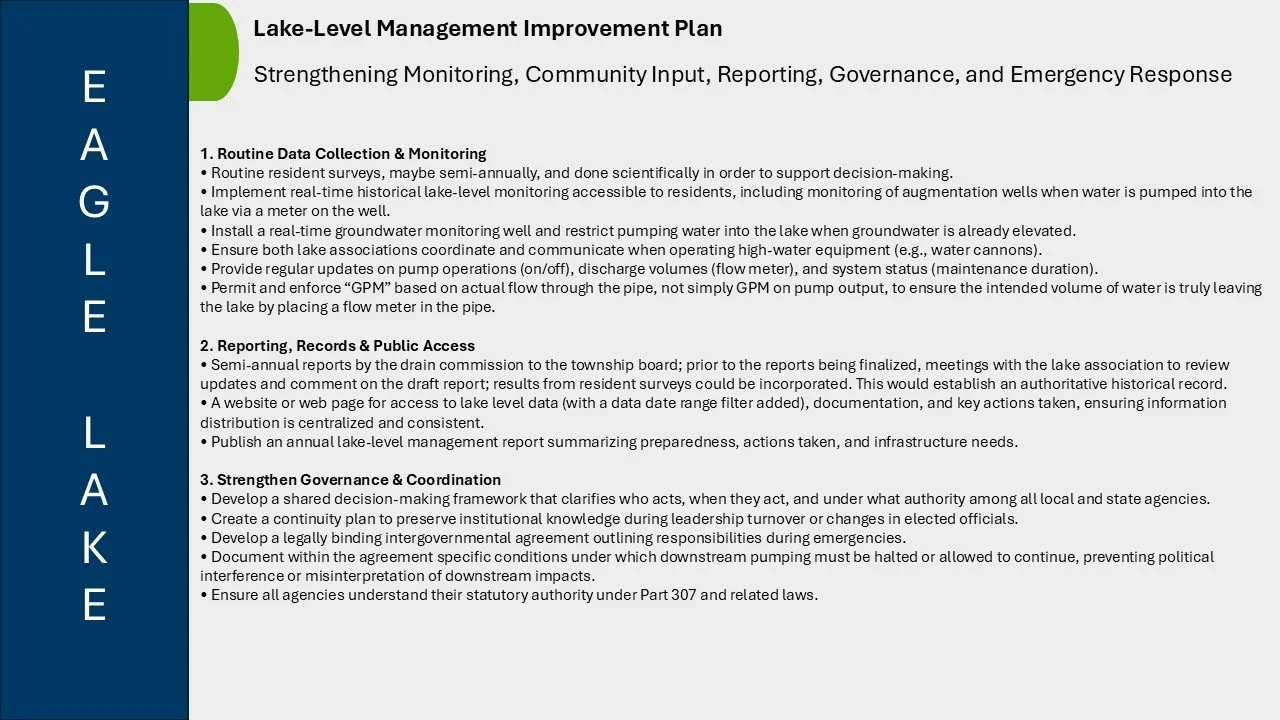
Pump output must be increased; no other mechanism exists to lower lake and groundwater levels.
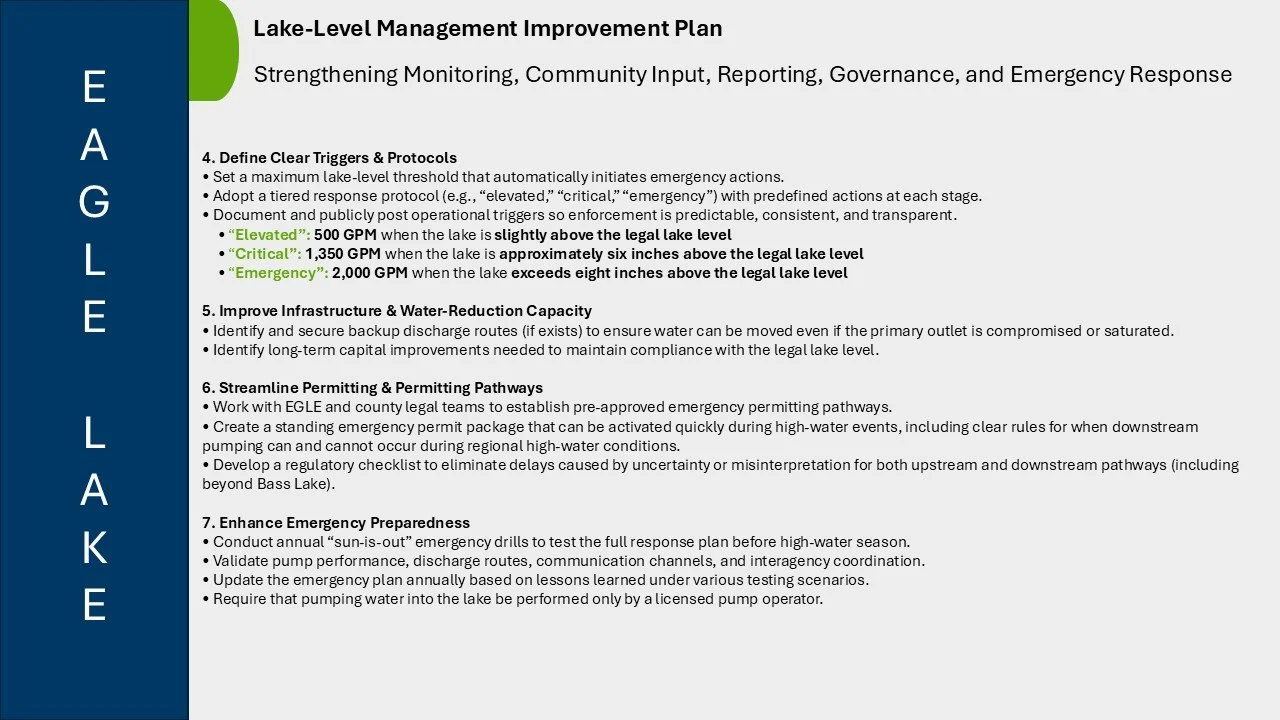
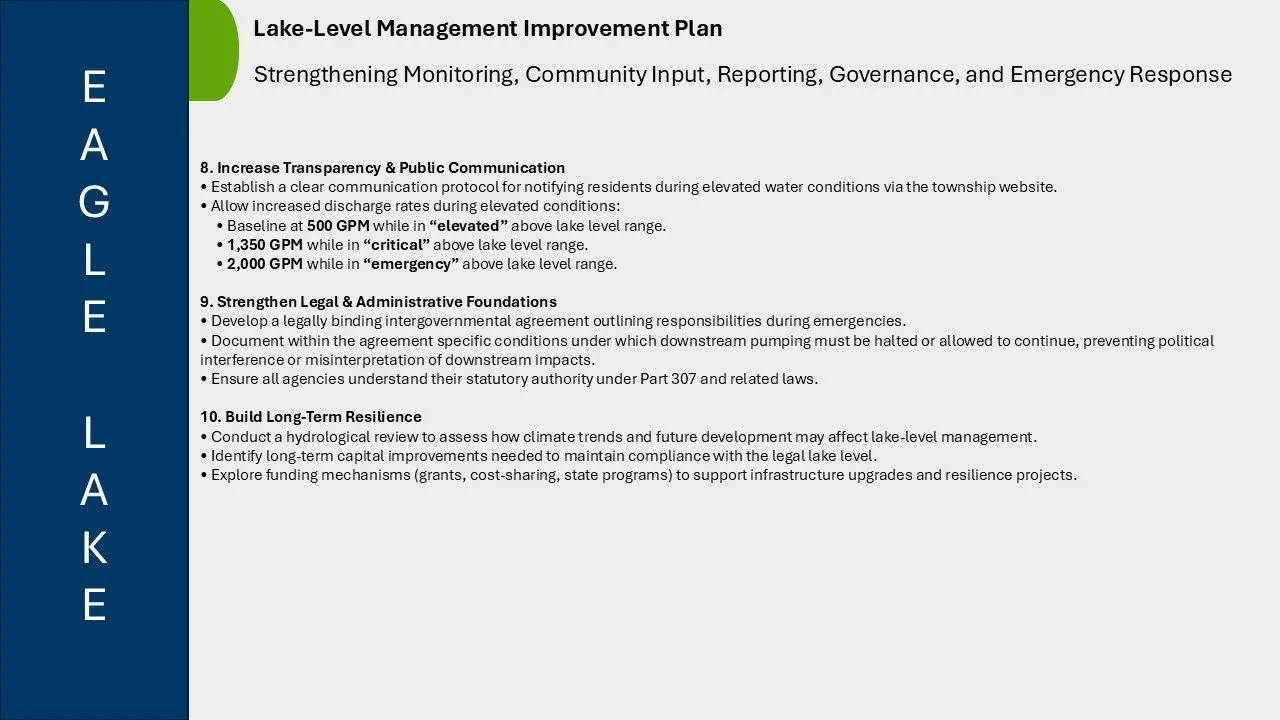
A higher‑capacity pump system (e.g., 2,000 gallons per minute) is needed to manage both normal and emergency conditions.
The township still has authority and responsibility before the system transitions to another office.
It must not hand off an unresolved problem and declare it complete.
Immediate steps should include a full system review, reassessment of pump capacity, creation of a real contingency plan, and implementation of necessary corrections.
6. Shared Goal
Residents and officials all want the same outcome: safe homes, stable lake levels, and a system that reliably works.
Achieving that requires decisive action now, not later.