CURRENT CONDITIONS

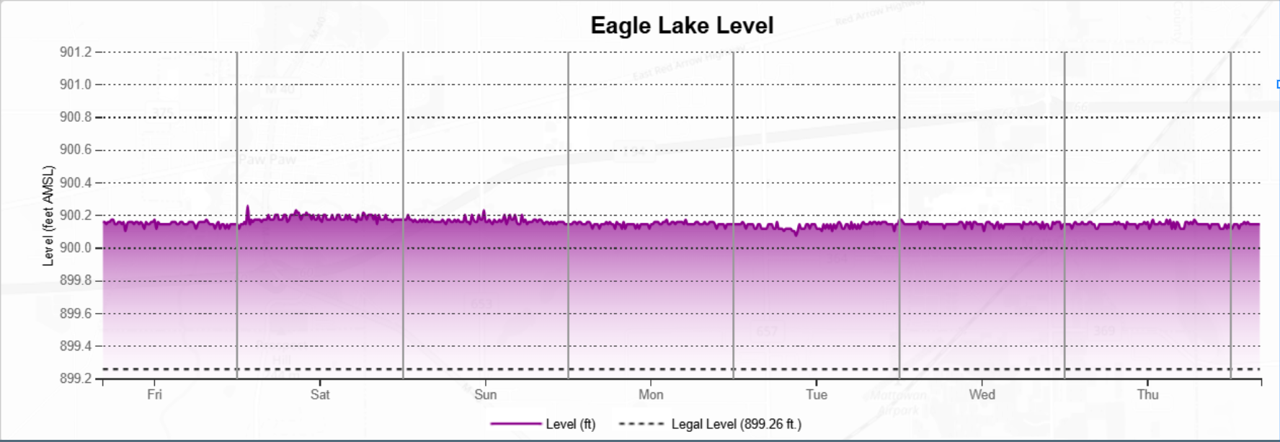
  • Eagle Lake is nearing one foot above its legal lake level of 899.26 feet.

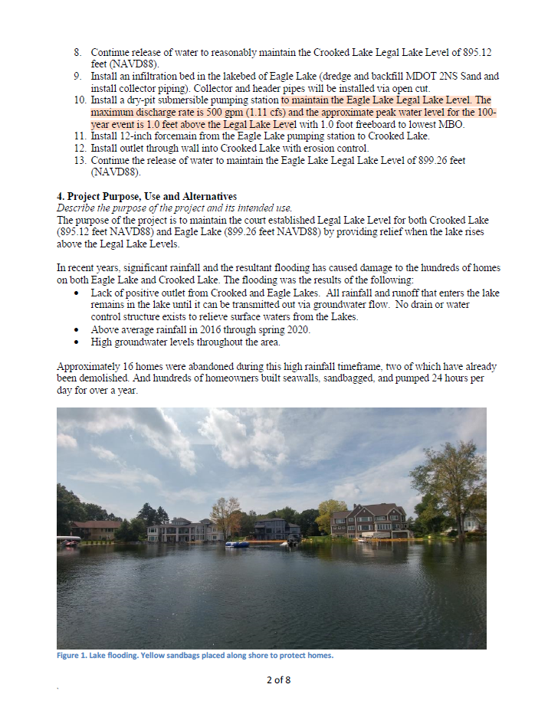
  • Engineering studies submitted by Prein & Newhof define the 100‑year flood elevation as: “The approximate peak water level for the 100‑year event is 1.0 feet above the Legal Lake Level.”

  • To prevent severe flooding, Eagle Lake now depends on the continuous operation of a 500‑gallon‑per‑minute (GPM) pump.

  • If this pump were to stop, even briefly, residents would face a high likelihood of needing to take emergency action to protect their homes, property, and general welfare.

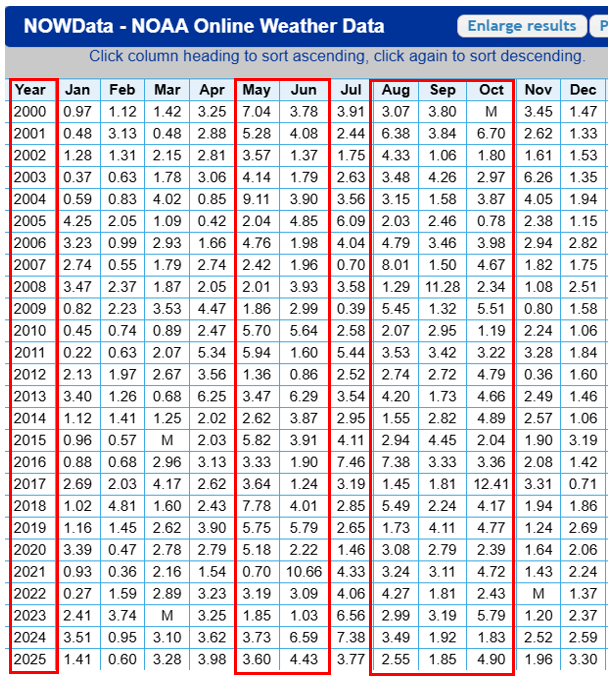
RAINFALL (YTD)

Historical Conditions: 1985

  • More rainfall fell in 1985 than has fallen through April 22 of 2026.

  • Texas Township had no mechanical pump in 1985, yet today the community is fully dependent on one.

  • Despite significantly higher rainfall in 1985, the township did not experience the recurring flooding that residents face today.

Conditions Today

  • Residents are now completely dependent on a mechanical pump system to prevent flooding.

  • This dependence persists even though recent rainfall totals are far lower than the record‑setting years of 1985 and 1986.

  • Flooding has continued for nearly a decade, despite lower rainfall and the presence of mechanical pumping infrastructure.

PREIN & NEWHOF DEFINES 100-YEAR FLOODMARK

Engineering Documentation Submitted to EGLE

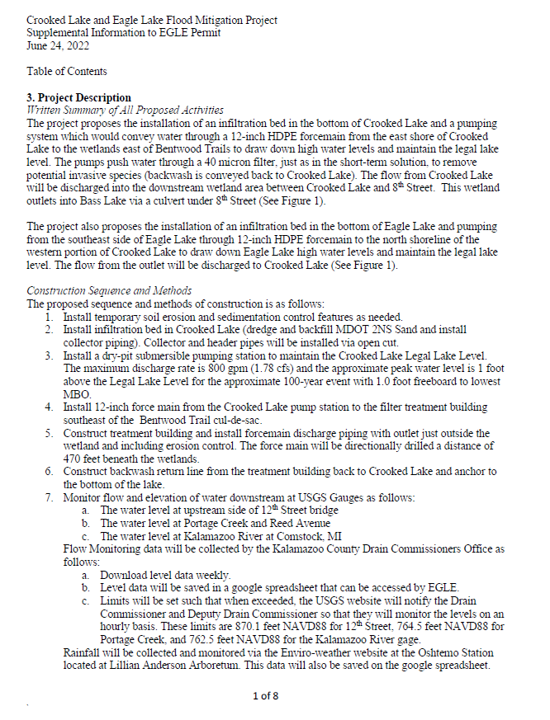
  • Prein & Newhof submitted multiple Supplemental Information sheets to the Michigan Department of Environment, Great Lakes, and Energy (EGLE).

  • Within these documents, Prein & Newhof formally defined the 100‑year flood mark for Eagle Lake.

  • These levels and definitions about the 100-year flood marks of Eagle and Crooked Lakes were submitted to EGLE and the Kalamazoo County Drain Office as part of the official engineering documentation.

Definition of the 100‑Year Flood Mark

  • The engineering definition states:

    “The approximate peak water level for the 100‑year event is 1.0 feet above the Legal Lake Level.”

Current Water Levels Relative to the 100‑Year Flood

  • Eagle Lake’s legal lake level is 899.26 feet.

  • The lake is currently within approximately 2 inches of the defined 100‑year flood elevation, approaching 900.2 feet.

Increased Risk From Waves and Erosion

  • A typical boat wave can add approximately 1 additional foot of water height.

  • When combined with current lake levels already near the 100‑year flood mark, waves can:

    • Overtop seawalls

    • Accelerate soil erosion

    • Damage shoreline structures and property

    • Increase safety risks for residents

Groundwater Impacts

  • Elevated lake levels cause subsurface swelling, raising the groundwater table.

  • These impacts can extend far beyond the shoreline, affecting properties miles away.

  • Lake ecosystems (trees, wetlands, and sensitive land areas) become saturated and begin to die.

Upstream Impacts

  • As lower lakes swell, areas upstream (Pine Island / Pretty Lake) begin to feel impacts as water cannot drain through the ground.

  • These lakes have no protection, including impacts on subdivisions’ rain basins that are near these lakes, which can fill rapidly as rising groundwater caused by swelling lakes prevents proper drainage.

    • Pine Island Plat

    • Vineyards

    • North Eagle Drive

    • Future plats (The Sanctuary)

  • Why aren’t we taking steps to increase Eagle Lake’s pump capacity from 500 GPM to 2,000 GPM—a capacity that was originally in place as part of the short‑term solution to provide adequate discharge and prevent Eagle Lake from reaching its current state at the officially defined 100‑year flood mark (one foot above the legal lake level), a condition that is now present?

  • What long‑term protections, such as increased pump capacity, are necessary to prevent Eagle Lake from reaching the 100‑year flood elevation—especially now that this threshold is being approached under rainfall conditions far lower than those seen in past decades?

  • What impacts will Texas Township and its engineering decisions create for Eagle Lake residents by permitting additional development (e.g., The Sanctuary) that will drain stormwater into a lake already trending toward the 100‑year flood mark under reduced rainfall?

  • At what point does “rain” cease to be a credible explanation for persistent flooding that has continued for nearly a decade?

  • How is it that for more than 200 years of township history—including the extreme rainfall years of 1985 and 1986—residents never depended on a mechanical pump, yet today every homeowner is fully reliant on one?

  • What systemic changes have occurred to create a condition where total dependence on mechanical pumping is now required not only to manage surface water, but also to prevent groundwater from rising into basements as lake levels swell?