ARMOUR GRAPE JUICE FACTORY
Grape grower Bert W. Payne sold Lots 1, 2, 3, and 4 of Block 6 in Kinnie’s Addition to Mattawan to the American Fruit Juice Company on April 20, 1903. Lacking the funds needed to properly promote grape juice, he later sold the business to H. S. Gray of Benton Harbor on December 12, 1905.
It is unclear whether the Gray family ever operated the factory. On April 8, 1908, they sold it to Henry Knapp of Battle Creek and Julius Desenberg of Lawton. Desenberg, a longtime merchant in Lawton and owner of a vineyard near Pretty Lake in Kalamazoo County, hired Philip Deats—who had experience with the Lawton Fruit Juice Company—to run the operation. The factory resumed production until May 9, 1909, when Desenberg and Knapp sold it to J. Ogden Armour for $5,000.
The facility itself was a one‑story wooden structure measuring 40 by 60 feet. In 1927, Armour and Company sold the former grape juice plant—by then used primarily for storage—to United Grape Products, Inc. of Buffalo, New York. This corporation was a consolidation of several struggling New York grape juice companies, organized by C. C. Palmer, president of the Hungerford‑Smith Grape Juice Company of Lawton. Their strategic goal in acquiring the Mattawan plant was to weaken Welch’s position in the market and ultimately take control.
The plan collapsed with the onset of the Great Depression, and Welch ultimately purchased the entire operation. Welch ran the plant from roughly 1934 until 1960, when it was sold to Glazer‑Crandall.
United Grape Products had attempted to introduce a grape concentrate product decades ahead of its time. The concentrate—made by combining equal parts cane sugar and pure Concord grape juice—was designed for bottlers and soda fountains to create carbonated beverages that could compete with Coca‑Cola. Although the product was high‑quality, it failed to gain traction, largely because it predated the modern juice‑concentrating technologies that would later make such products commercially viable.
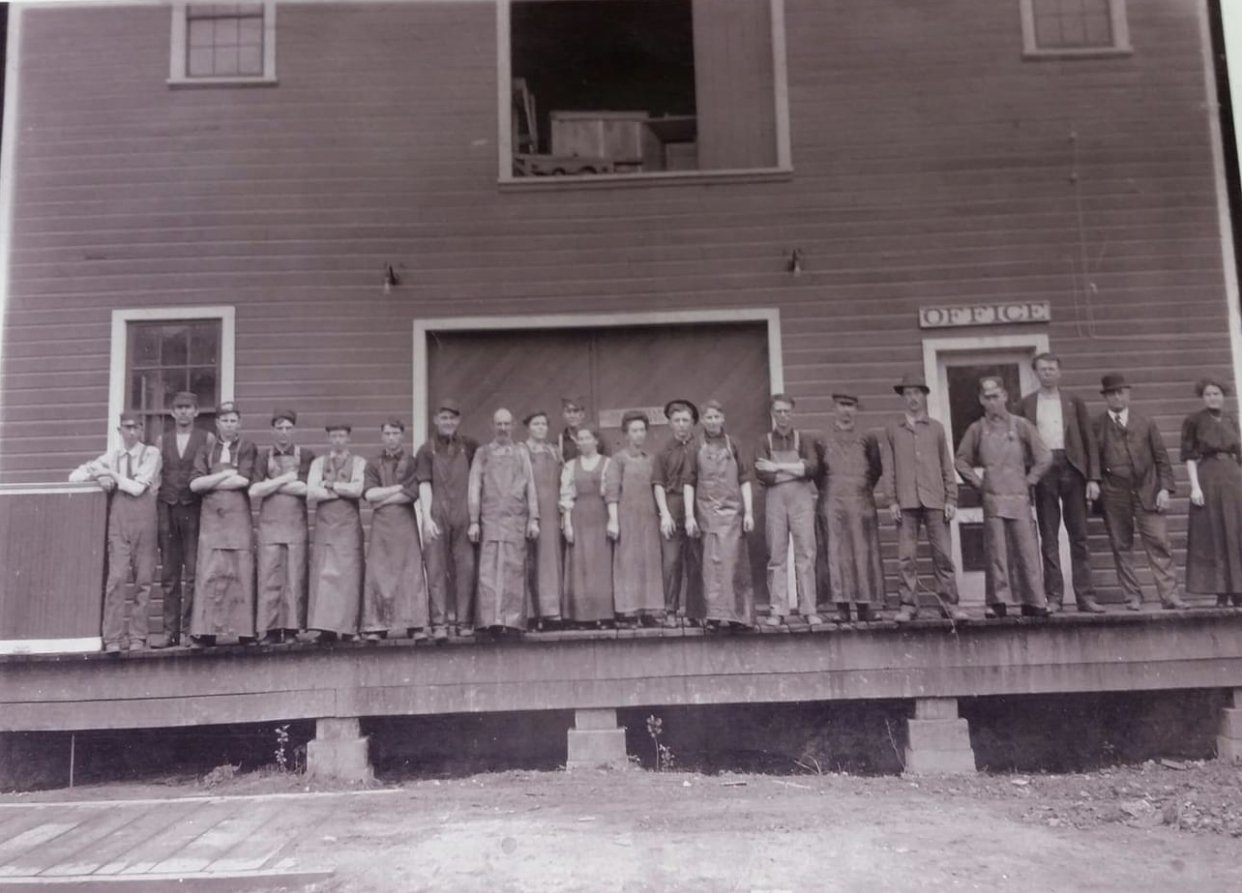

Original factory made of wood. Note the water tower.
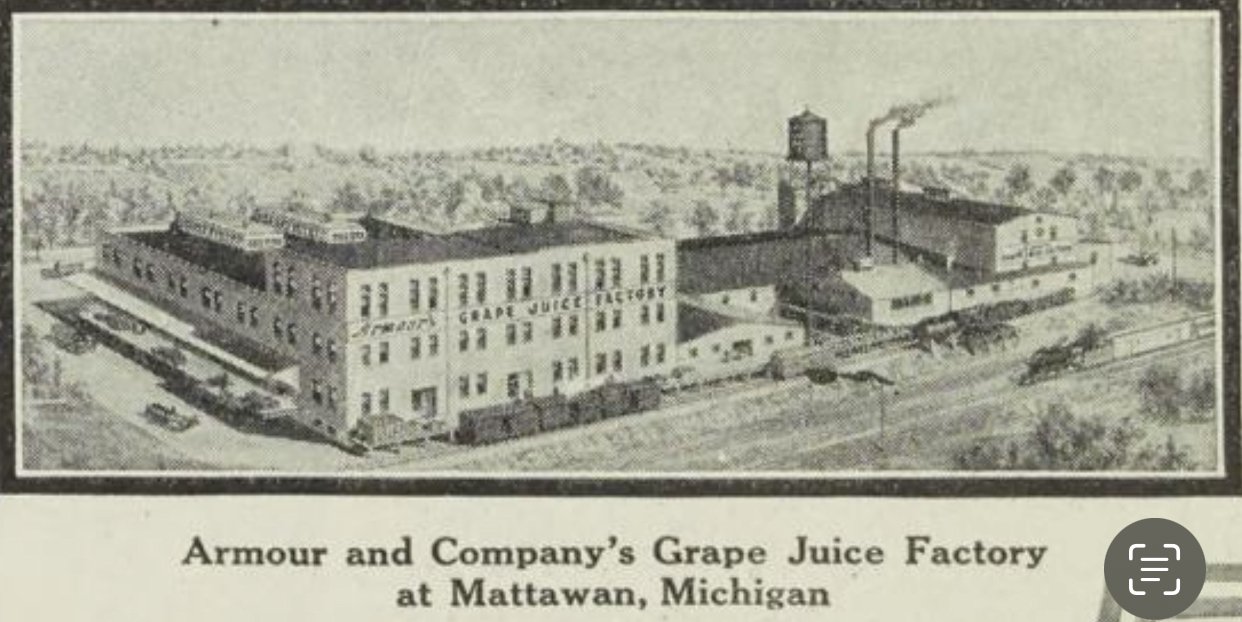
The factory expanded and the wood building is seen to the right w/ the water tower. Picture about 1908.

Gapes coming in by horses and wagons for easy export by the railroad. Beyond this plant existed a slaughter house where pigs were loaded into the back of trains while passengers loaded the front of the trains in today’s Mattawan Park near the bridge shown in the picture.

Residents of today likely recall the factory as appears above. Note company Glaser & Crandall painted white on the bricks and ties to the historical story of ownership. The water tower still standing above the roof.
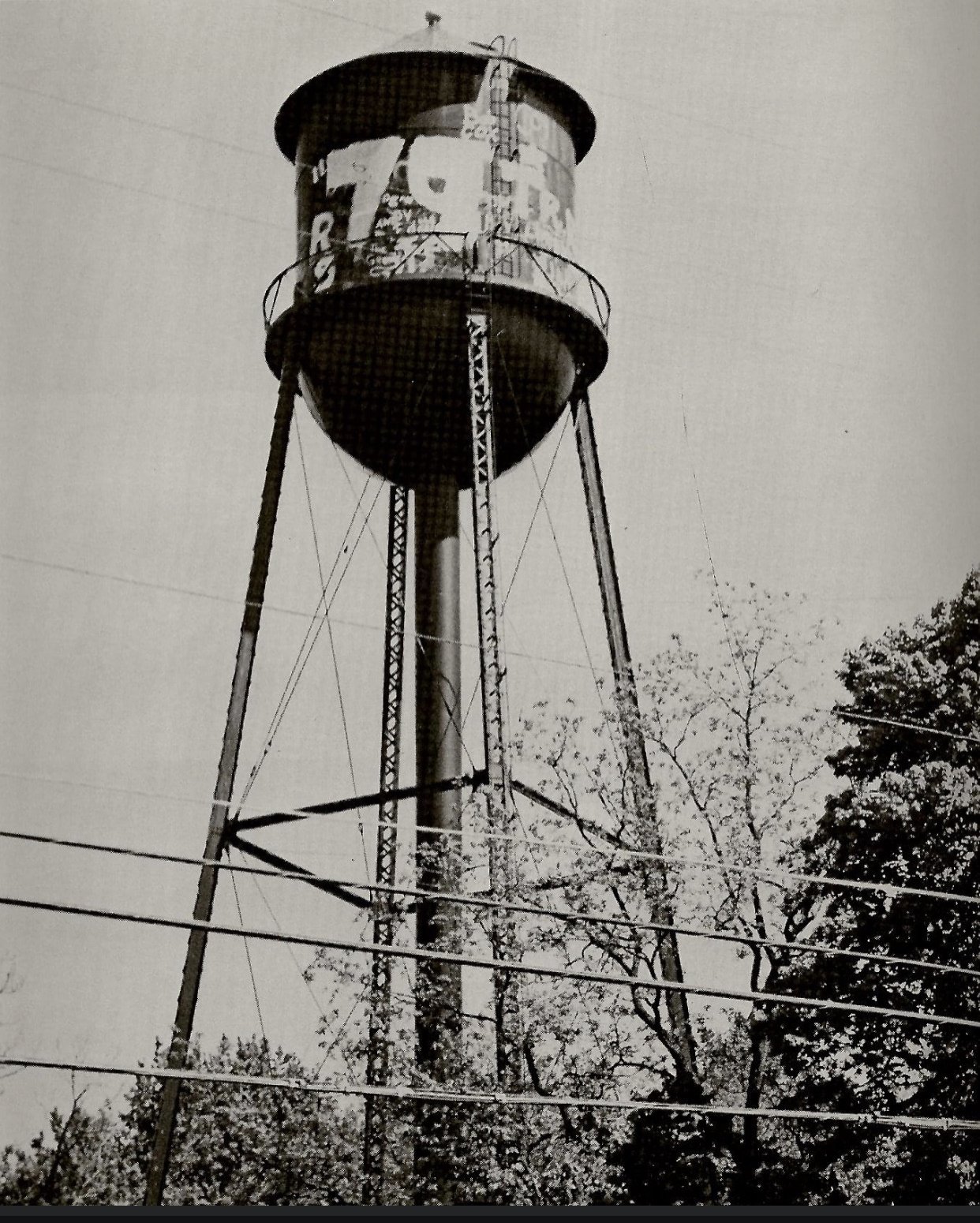
The old water tower as it stood for over 100 years, taken down late 1990s,