To the Members of the Texas Township Board and Planning Commission,
I am writing to express my deep concern about the widening gap between the rapid pace of development in Texas Township and the capacity of our fire‑rescue system to protect the residents who live here today. The township’s own data, planning materials, and public communications show that our emergency‑service capacity has already been exceeded. Yet major new development initiatives, most notably the 9th Street/I-94 corridor and additional subdivision approvals, continue to advance without the public‑safety infrastructure required to support them.
A recent public Facebook post from the Texas Township Fire Department underscores the seriousness of this issue:
“With the growth in our community, we’ve seen a substantial increase in call volume. Currently, 22% of our calls overlap—meaning we are already responding to one emergency when another occurs.”
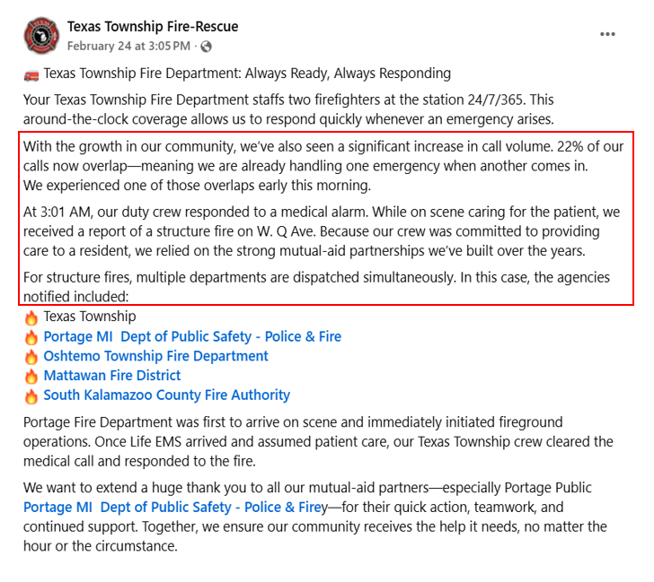
This is not an abstract statistic. It means nearly one in four emergencies occur when our firefighters are already committed to another incident. With only two firefighters on duty at any given time, the township is operating beyond safe capacity. This is a documented operational reality that places residents, businesses, and first responders at risk.
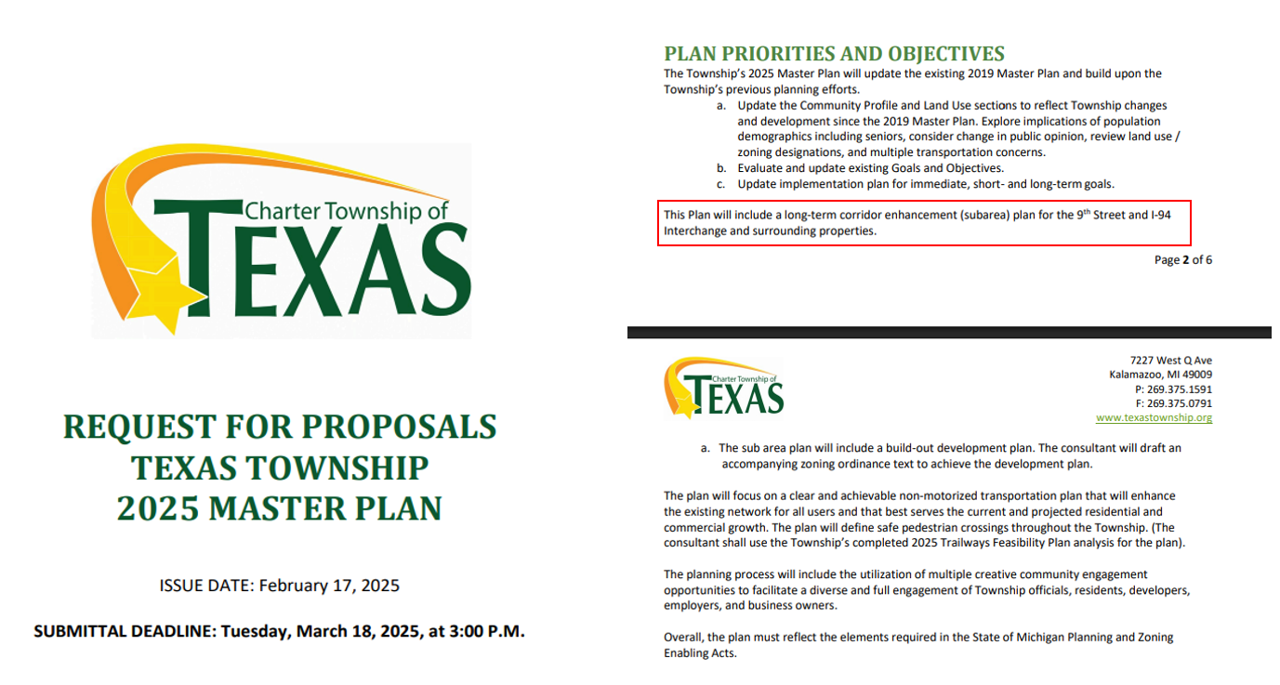
Despite this, the township continues to pursue additional development, particularly in the 9th Street/I-94 corridor, without a clear plan for how to protect the increased population and activity that such growth will bring. The township’s own Master Plan Request for Proposals outlines a long-term build-out vision for this corridor, yet the public‑safety infrastructure needed to support that vision has been delayed, removed, or left unfunded.
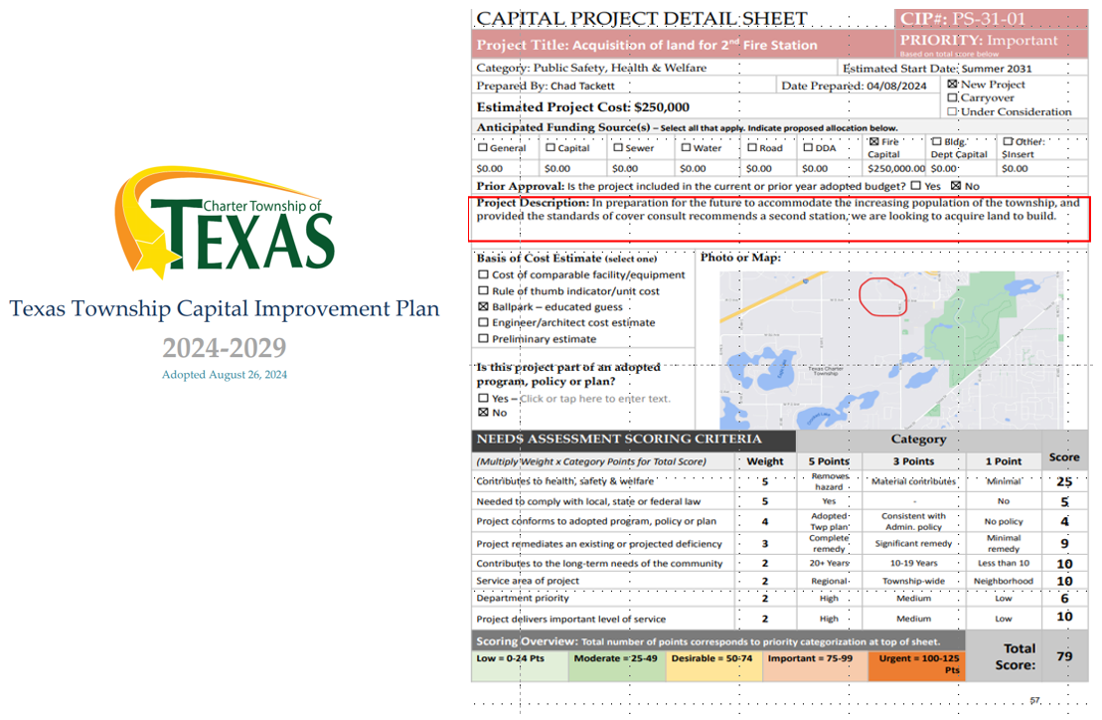
One of the clearest examples is the Capital Improvement Plan (CIP) scoring sheet for a second fire station, located near the very corridor slated for expansion. Township staff evaluated this project and scored it as Important, citing its contribution to health, safety, and welfare; its role in remedying projected service deficiency; and its township-wide impact. Land acquisition alone was estimated at $250,000—before considering the millions required for a fire hall, apparatus, and staffing.
Yet in the updated 2025–2030 CIP, this project is absent.
This raises serious questions. If the township acknowledges that growth is driving increased emergency‑service demand, why was a project previously identified as essential for public safety removed from the CIP? And how can the township continue developing, especially in the 9th Street corridor, when our Fire Department is already reporting that growth has contributed to nearly 25% of all calls overlapping?
This is not responsible planning and responsible board approvals. It is dangerous for both residents and firefighters.
Compounding this concern is the township’s struggle to fund even its existing fire‑rescue needs. Public communications have acknowledged:
A 25-year-old fire engine beyond its recommended service life
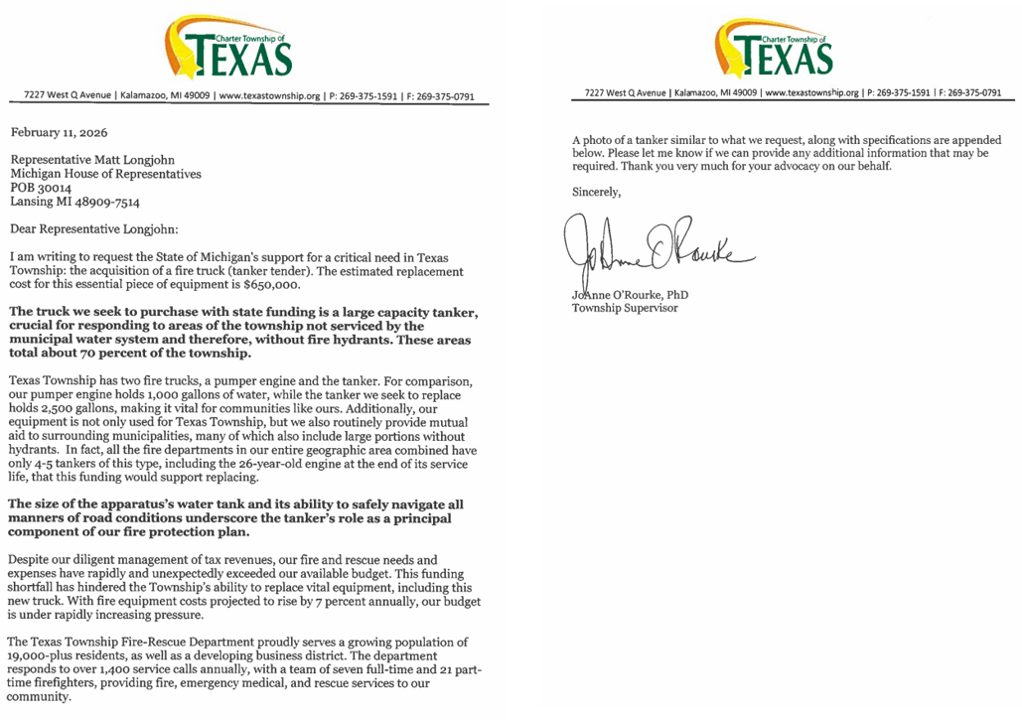
A tanker that must be replaced, prompting letters to state representatives
Equipment costs are rising approximately 7% annually
A failed Special Assessment District proposal in 2025
A delayed millage vote is now planned for 2026
These are clear indicators that the township is already behind on funding the fire-rescue system required to meet current demand. It is unclear how residents would be expected to fund a second fire station, additional apparatus (trucks/equipment), a new station, and the staffing required to operate them—costs totaling millions of dollars—yet development continues at full speed.
This pattern suggests a troubling approach to planning: approve growth first, allow strain to accumulate, then ask residents to pay for the consequences. The foundational purpose of planning—protecting the health, safety, and welfare of residents—appears to have been overshadowed by the pursuit of continued development.
I respectfully urge the Board and Planning Commission to realign township planning with its fundamental obligation to safeguard public safety. This requires several immediate actions:
Re-evaluate the removal of the second fire station from the Capital Improvement Plan and provide full transparency to residents about the township’s long-term intentions. If a second station will ultimately be necessary—as prior CIP scoring already indicated—residents deserve to understand this now, including the likely cost, before being asked to vote on a millage. At present, the community has only part of the picture.
Ensure that the 9th Street/I-94 corridor plan does not advance without the safety infrastructure required to protect it. With a publicly reported 22% overlapping call rate attributed to rapid growth, it is neither prudent nor responsible to continue planning major development in this corridor without first addressing emergency service capacity. A temporary pause in further advancement of the corridor plan is necessary until public safety readiness is established.
Reaffirm that the health, safety, and welfare of residents take precedence over the pace of development. This includes drafting ordinance language that allows the township to deny subdivision or site plan applications when overlapping call thresholds indicate that emergency service capacity has been exceeded. Residents should not bear the risk created when growth outpaces the township’s ability to respond to emergencies.
Texas Township cannot continue to grow faster than it can protect its residents. The alarms are already sounding: 22% of emergency calls overlap, equipment is aging, funding is left up to “hope” it will be approved, we still build, and reliance on mutual aid from other municipalities is increasing. These are not early warnings; they are signs that the township is already falling behind. Even if the millage is approved, we will still be lagging. In essence, our current plan works great if you are not the one who must dial 911. If you’re one of the unfortunate people, you have a 22% chance of being an overlap call. What if Mattawan was already tied up on another call? That’s dangerous!
To address these issues, we must slow the pace of growth until public‑safety capacity is restored. This is what responsible governance must entail. Our community deserves growth that is sustainable, transparent, and aligned with our ability to protect every resident. To begin, is to stop the cause of the bleeding patient – unsustainable growth.